20 Handy Suggestions For Choosing Termite Extermination Services In Jakarta
Wiki Article
Post-Construction Termite Barriers In Jakarta
The majority of Jakarta homeowners believe termite barriers are installed when the foundation is exposed, before the concrete is laid and the walls rise. It's a costly notion. The belief of property owners is that once the slab has been cast and poured, they have no alternative than chemical trenching - repeated applications of terminicide, which degrades in Jakarta's humid and alkaline soil. This assumption has been rendered obsolete due to the development of retrofit barrier systems. These are installed through perimeter excavations that are mechanically attached to foundations that are already in place. Post-construction barriers do not replace the protection provided by pre-construction. Different technologies have different performance profiles. Jakarta anti-termite businesses which do not offer both services are ruled out of the fastest growing segment of the urban pest management market.
1. There are obstacles in retrofitting that prevent retrofitting. They exist
The installation of stainless steel mesh bonded-sandgranules and polymer membranes impregnated with slow-release termiticides on foundations is a possibility. This requires excavation of the foundation walls, removing of soil, then installation and mechanical fixing of the barrier. It's disruptive, expensive and lasts for a long time. Jakarta exterminators who insist that the only way to get rid of them is injecting liquids every year are misrepresenting available technology.
2. Liquid Barriers Degrade; Physical Barriers Do Not
The rate of hydrolysis is faster in Jakarta for termiticides applied in soil. Active ingredient half-life is reduced by a long time due to high temperatures, an alkaline pH and a heavy rain in the rainy season. Physical barriers like mesh, sheets, or graded stones don't diminish in value. They perform the same on the exclusion of year 10 and year 1. Chemical barriers perform worse for those who are able and willing to afford a higher cost for a long-term commitment.
3. The Benefit of Moisture Reduction is Not Publicized
Barriers made of polymer are made to stop termites as well as prevent capillary moisture from soil migrating into the masonry. Drier foundations mean drier timber. The wood that is drier is not detectable. Termites can't attack something they don't recognize. Solutions to combat termites that include physical retrofits offer two interventions for the cost of one. They should be recorded in the proposals made to customers.
4. Partial Perimeter Is Not a Barrier
Jakarta's dense urbanization--party wall, adjacent structures, and paved rights-of-way makes full perimeter excavation difficult. The termite service that promotes parts of the installation as "barriers" are merely presenting a the subterranean bypass. The termites walk around any open ends. The correct terminology is "partial circumference intervention" with documented gaps of exclusion. Homeowners must be aware of what gaps remain unprotected.
5. Bekasi Adoption Signal
Jakarta and the metropolitan area have begun implementing physical retrofit technologies. Early adopters don't live in Menteng and Kebayoran. Instead they reside in Bekasi. There is a greenfield area that creates a coordinated construction sequence. Jakarta exterminators, which monitor only the central Jakarta bids, are missing out on the trend. Physical barriers are adopted in the cities of secondary importance and then moves to the north.
6. Construction Specification of the Architect Prevails Contractor Substitution
Emporio Architect (and similar firms) are now defining a physical barriers in their renovation plans. Anti-termite firms are contractors in the value chain. They are not in control of the specifications. To move the sales of homeowners towards architectural companies, structural engineers and pest control companies will need to change their approach. Selling retrofits to an owner of a property is transaction economics. Annuity economics has entered the master specification of an architect.
7. The Additive Depletion Ccurve Favors the chemistry that is infused
Liquid Termiticides that are applied to soil are surface-deposited and degraded from Day One. Polymer sheet barriers contain additives infused throughout the matrix during manufacture; depletion occurs only at the exposed edge and follows a diffusion curve measured in decades. Physical barriers come with an assurance that is actuarially sound. Five-year warranties for liquid barriers are speculative.
8. The feasibility of a construction project is determined through the excavation access.
Access to buckets is the primary barrier to post-construction but not budget. Mini-excavators must have approximately sixty centimeters between them and the foundation. Ineligible for geometrics are homes with zero-lot line construction, shared drives or hardscapes that are firmly attached on the walls. Before quoting and prior to mobilizing, antitermite services must conduct an audit of access.
9. ESG Reporting is the catalyst for Commercial Demand
Indonesian companies that have sustainable practices, like multinational tenants and green building applicants can now track carbon emissions in structures. The CO2 emissions from the application of liquids in a sporadic manner termiticides have been documented. Physical barrier installation--one-time excavation, mechanical fastening, zero recurrent chemical application--qualifies as emissions reduction. Jakarta exterminators that serve corporate clients need to reveal their carbon equivalents or risk losing the bid to competitors.
10. Retrofit Barriers come with different warranties.
The plane of the barrier is guaranteed against termite infestation. Post-construction barriers cannot offer this guarantee, as the barrier is only enclosing only a part of the perimeter which is accessible. The warranty should read "exclusions of zones that are treated" and not "protection for entire structure." Oversold protection is a frequent myth among homeowners. Exterminators who document exactly what has been installed and the areas that are still vulnerable will be more likely to settle claims disputes and retain their clients.
The final sentence of the article is:
Jakarta's post-construction termite barrier is situated at the intersection of three trends which have been converging: the degradation rates of termiticides used on soil in tropical urban areas, the specification by architects of permanent barrier systems and the increasing corporate demands for pest control methods that work with carbon accounting frameworks. Anti-termite service providers that continue to define post-construction protection as chemical trenching don't protect market share, they protect outdated technology. The equipment required--mini-excavators, core drills, mechanical fasteners--is capital-intensive but one-time. The training required--analysis of soil, access auditing and warranty documentation- is knowledge intensive but it is transferable. Bekasi is now the barrier-era capital. Within the next 24 hours, Jakarta will have it. Pest control companies waiting for customers to ask for capability before they can acquire it will be able to enter the market within two years' time behind the early adopters. They would be competing against established physical barriers contractors that have references to installations and connections with architects. This isn't a matter of the need to upgrade retrofit capabilities. This decision will determine whether we are leading or following this market. See the best jasa basmi rayap for more info including kitchen set anti rayap, anti rayap kayu, pintu anti rayap, rayap rumah, membasmi rayap, pembasmi hama, anti hama, jasa basmi rayap, jasa basmi hama, anti rayap and more.
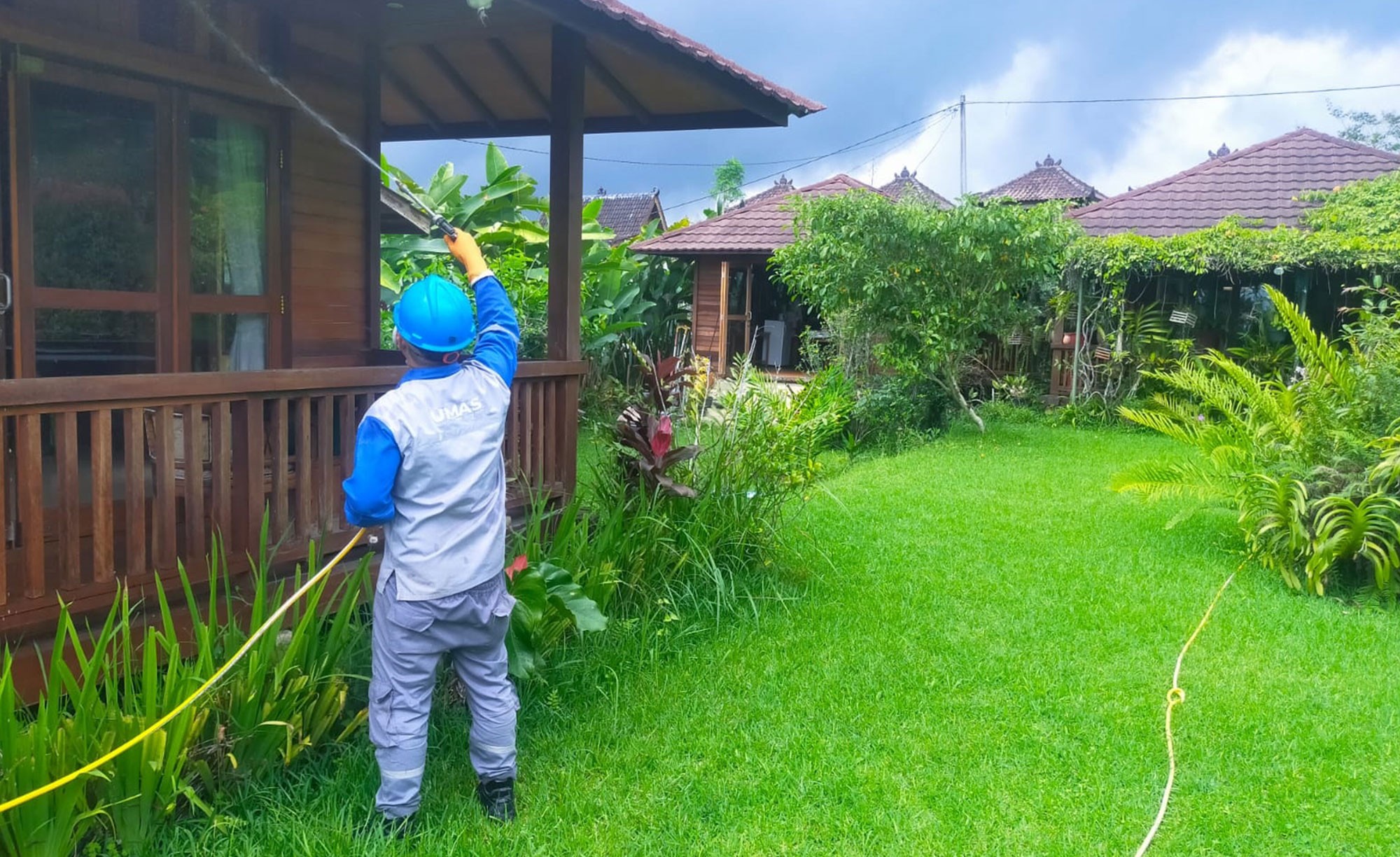
Jakarta Indonesia Has A Tropical Climate That Is Constantly Threatened By Termites.
Pest control franchises from temperate regions ship equipment, chemical formulations as well as training manuals to Jakarta only to find out that after 18 months, nothing is working. This isn't a flaw within the product. The tropical urban climates invalidate those assumption. The termites of Jakarta don't experience an end to winter foraging because there isn't any winter season in Jakarta. The termiticides applied to the soil hydrolyze at a rate that have not been observed in Ohio or Osaka because Jakarta's soils stay dry and warm all year long. Menteng's high levels of humidity affect the flavor of baits, therefore Melbourne designs aren't applicable. Anti-termite treatments that view Jakarta as a tropical version of a temperate market are guaranteeing suboptimal outcomes. Jakarta isn't an exact copy of any other place. It is a distinct operational environment.
1. Zero Foraging Downtime, 365 Days
Temperate termite populations cease to hunt when temperatures drop to below fifteen degrees Celsius. Jakarta's temperature fluctuations remain within the active foraging range of Coptotermes gestroi and Microtermes insperatus. There is no window for seasonal treatments. No month is a good time to renovate. Methods for removing colonies should be based on continuous feeding three hundred sixty-five day per year.
2. Humidity Exceeds Tolerance for Cuticles
Termite cuticles desiccate below seventy percent relative humidity. The average humidity in Jakarta in the dry season ranges between 75-80 percent. The humidity during the wet season can reach 90%. Termites do not merely tolerate these conditions; they are compelled to forage constantly because their water balance requires frequent replenishment. Constant threat does not mean hyperbole, it means physiological necessity.
3. Chemical Half-Life Contracts based on Months
Hydrolysis accelerates with both humidity and temperature. In Jakarta the effectiveness of a soil termiticide that lasts 6 months in Hiroshima will last only three to four years. The termite prevention service that provides a twelve-month warranty on treatments that use liquid barriers is either over-concentrating applications or misrepresenting the remaining life or taking predictable reapplications into account as a business expense.
4. Silty Clay is used as a colony Infrastructure
Jakarta's predominant urban type of soil clay, which is compact and silty, retains enough moisture to draw subterranean termites. If the soil's moisture level is greater than 22 percent, termites won't accept the surroundings. They will begin to colonize it. Exterminators that apply chemical treatments without first determining soil moisture treat symptoms, but leave habitat conditions unaltered.
5. The preferred wood types are Construction Defaults
Coptotermes curvevignathus is a fan of pine, red light meranti and mangium. They are also some of the most commonly used framing and joinery timbers in Jakarta's middle-class housing market. Merbau and Teak are not as appealing to termites, however they can cost three times as much. The Jakarta construction industry has selected timbers that termites love.
6. Fungus-Growers Dominate, Coptotermes Destroys
Jakarta's termite assemblage is numerically dominated by Microtermes insperatus and Macrotermes gilvus--Termitidae-family fungus-growers that require soil contact and organic debris. Coptotermes gestroi is a less well-known termite species, can cause structural damage that is insignificant. For termite control services, which concentrate their marketing efforts on Coptotermes only, they misrepresent Jakarta's real species composition.
7. Green Spaces are used as colonies Reservoirs
The remaining urban forest patches of Jakarta Cemetery groves, agroforestry, and unmaintained railway corridors sustain the parent colonies, which radiate out foraging tunnels into adjacent residential blocks. The nine Hazard sub-districts of class One have one common trait: they have a large amount of vegetation. These zones are not able to be protected by property-line treatments. To suppress colonies at the neighborhood level, it is important to coordinate baiting on multiple properties.
8. Construction Activity manufactures Housing
Jakarta's urbanization doesn't eliminate termite nests, it simply creates another. Imported fill, irrigated landscape and buried construction waste provide ideal conditions to establish colonies. A newly built housing development in BSD also known as Bekasi it is not a pest-free environment. The termite colony was established when the first tree is planted.
9. Imported Wood Bypasses Quarantine
Tanjung Priok, a containerized trading port located in Jakarta, is a city of choice for the termites that have become invasive. It also serves as a donor city for exporting infested pallets and made wood products to temperate ports. This bidirectional flow permits constant genetic exchange, which prevents colony isolation. The termite outbreak that occurs every month in Jakarta is reinforced due to the arrival of container ships.
10. Climate Migration Boosts Population
As temperatures increase the habitats that were once less than ideal within the Javanese Highlands are now suitable for species of lowland termites. Parent colonies, which are located at higher elevations during warmer years, survive mild winters. This allows them to extend their foraging range. Jakarta isn't just being attacked by local colony. Jakarta is being attacked by an increasing front of populations that are migrating from cooler refugee which no longer function as refugia.
Conclusion
A tropical climate, constant threat of termites--this phrase is not a marketing ploy. It's a requirement of operations. Jakarta anti-termite treatments should calibrate the rate of application of chemical treatments for rapid decay, set up bait stations to use all year long, and test the soil's moisture prior to every treatment and differentiate between structurally destructive Coptotermes and numerically dominant Coptotermes. The market doesn't reward services that complain about difficult conditions. The market rewards companies that adapt protocols to the conditions and record the results. The climate in Jakarta isn't an excuse to not treat. This factor distinguishes specialist exterminators from generalists that use protocols imported from different countries. Homeowners can differentiate between the two types. Homeowners can determine the difference through their inclination and inability to renew the contracts of the latter. Take a look at the recommended anti rayap jakarta for more advice including jasa basmi rayap, pembasmi rayap kayu, pembasmi hama, jasa basmi rayap, cara basmi rayap, penyebab rayap, rayap kecil, kitchen set anti rayap, pembasmi rayap, membasmi rayap and more.
